
You might have a powerful drone or a fast RC car that excels in every aspect. But if the battery can’t deliver enough power, you will not get the performance you expect. The model will feel slow, lose power quickly, or even fail to work the way you want. To overcome all these issues, 6S LiPo batteries come into the scene. They deliver the high voltage and power many performance-focused models need today. But if you are new to LiPo batteries, terms like 6S sound confusing and technical. But you need not worry! This guide to 6S LiPo Batteries for Drones & RC Models will make it easier. I will explain what 6S LiPo batteries are, how they work, their voltage, C rating, and more. So let’s get started.
What Is a 6S LiPo Battery?
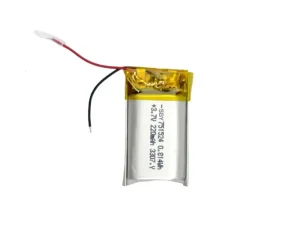
A 6S LiPo battery is a rechargeable battery made from six lithium-polymer cells. These six cells are connected in series, so their voltages add together. Each cell has a nominal voltage of about 3.7V. This gives the battery a total voltage of 22.2V. These batteries power drones and RC models that need more power.
Here, the term 6S might confuse many beginners. But it’s really just about the number of cells. You might have heard of 2S and 4S LiPo batteries as well. These numbers show how many cells are in a battery. In this case, the 6S LiPo battery has 6 cells. However, the S means these 6 cells are connected in series.
Similarly, the abbreviation LiPo stands for lithium polymer. It is the type of rechargeable battery designed to provide high power. The best thing about these batteries is their compact design, which makes them lightweight. This lightweight design is what makes these batteries handy in modern devices, including RC cars and drones.
What Is LiPo Storage Voltage?
LiPo storage voltage is the voltage you should keep a LiPo battery at when you won’t use it for some time. It is usually around 3.8V per cell. For a 6S LiPo battery, this works out to about 22.8V in total.
Basically, a single battery cell has 4.2V when fully charged. So when six such cells are fully charged, the total voltage becomes 25.2V. However, you shouldn’t leave a 6S LiPo battery fully charged if you are going to store it for days or weeks. Why? The reason is that storing it fully charged puts stress on the battery cells and accelerates aging.
At the same time, if you leave the 6S battery empty, it will damage the cells and make them difficult to charge again. That’s why manufacturers recommend a storage voltage for 6S batteries. This is 3.8V per cell, for a total of 22.8V. This storage voltage keeps the battery somewhere in the middle, where the cells are under less stress. So if your 6S LiPo battery is fully charged and you are going to store it, you must first bring its voltage down to storage voltage.
How Does a 6S LiPo Battery Work in Drones & RC Models?
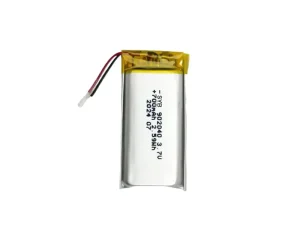
A 6S LiPo battery is basically the power source for drones and RC models. It stores electrical energy and delivers it to the motor when the model needs it. As you know, the battery contains six LiPo cells connected in series. Each cell provides around 3.7V, so together they give the battery a nominal voltage of 22.2V.
However, once it gets fully charged, the battery reaches about 25.2V. This stored energy allows the drone and RC to run. In a drone, the 6S LiPo battery doesn’t send power directly to the motors. Instead, the power first goes through the ESC (Electronic Speed Controller). It is like a bridge between the battery and the motor. When you move the throttle, the ESC controls the amount of electrical power the motors receive from the 6S battery.
More power makes the motors spin faster, which means the battery is delivering more current. As a result, it creates more thrust and helps the drone climb or move quickly. In an RC car, the same basic process happens. The only difference is that the power from the 6S battery turns the wheels.
Why Prefer 6S LiPo Batteries for Drones and RC Models?
There are several reasons that make 6S LiPo batteries a preferred choice for today’s modern drones and RC models. The first one is their higher voltage. As I said above, a 6S battery has a nominal voltage of 22.2V, which is much higher than a 4S pack at 14.8V. When the motor and ESC use a 6S battery, this extra voltage helps the model deliver more power and respond faster. As a result, the model accelerates quickly and handles demanding movements very well.
Another reason is that higher voltage helps a system deliver the same power with less current. Suppose two systems both need the same amount of power. One uses a lower voltage, while the other uses the higher voltage of a 6S battery. The 6S system will provide that power with less current. This lower current reduces heat in the wires, connectors, and other electrical parts.
Lastly, 6S LiPo batteries offer a good balance of power and weight. They are made in a compact design, which makes them lightweight but still store a lot of energy. This is what matters for RC and drones. Because of the extra weight, the drone might not fly as high. But remember, the 6S isn’t automatically better for every model. It makes sense when the entire power system is designed to take advantage of the higher voltage.
How to Charge a 6S LiPo Battery?
There is no doubt that 6S LiPo batteries provide a large amount of power for RC and drones. However, once they get empty, it is crucial to charge them safely. Unlike regular batteries, these 6S LiPo batteries need special attention. Small charging mistakes can ruin their performance. Here’s how to charge a 6S LiPo battery safely.
-
Use a LiPo Balance Charger
First of all, use a charger made for LiPo batteries that supports 6S packs. For charging these batteries, the balance charge mode is important. Why? It continuously checks each cell while charging the whole battery. This is crucial because the six cells don’t always stay at the same voltage. If one cell drops below or rises above another, the battery won’t fully charge. So a balance charger ensures all cells stay at the same level.
-
Set the Right Charging Current
Next comes the charging current. For many LiPo batteries, 1C is the starting point, unless the manufacturer gives different instructions. The “C” value here is based on the battery’s capacity. Some LiPo batteries are designed to accept faster charging. In that case, the charging current can be higher than 1C. However, faster charging is not always reliable. If the 6S battery maker recommends 1C, stick with it.
-
Let the Charger Check & Balance the Cells
Once charging begins, the charger supplies energy to the 6S battery cells. At the same time, it monitors each cell and keeps them at similar voltage throughout the process. A healthy 6S battery will gradually move toward 4.2V per cell. When all six cells reach their proper full-charge level, the total pack voltage becomes about 25.2V. Do not try to push the battery beyond this level. Overcharging can swell the battery cells and, in severe cases, cause heat and fire.
-
Never Leave a 6S LiPo Battery Charging Alone.
This is one of the most important things you must remember. Do not start charging a 6S LiPo and then leave the room. It can overcharge or overheat in your absence, which can cause accidents. Also, charge it in an area away from things that can easily catch fire. In addition, never charge a battery that is swollen, punctured, leaking, badly damaged, or unusually hot. If something looks wrong during charging, stop charging immediately.
What Does the Capacity and C Rating of a 6S LiPo Mean?
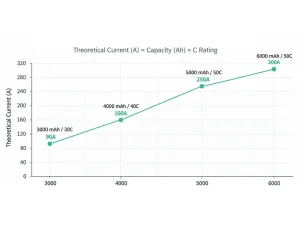
When you look at a 6S LiPo battery’s specifications, you will usually see numbers in mAh and C on the label. These terms tell you two different factors. The first thing is capacity, which is about how much energy the battery can store (measured in mAh). However, the C rating means how quickly the battery delivers current.
Both terms are important when choosing the battery, but don’t confuse them. Capacity is usually shown in mAh (milliamp-hours). The higher the mAh number, the higher the battery capacity will be. That means it stores more energy. For example, a 6S battery with a capacity of 6000 mAh stores more energy than one with 3000 mAh.
Generally, a larger capacity gives your drone or RC model more runtime. It will run longer without needing a quick recharge. But there is a trade-off. A higher-capacity battery is usually larger and heavier. This can affect the drone’s flight performance. Now it comes to the C rating.
It’s about how quickly the battery supplies current. For example, a 5000mAh battery with a 50C rating has a theoretical continuous discharge rating of 250A. Why? Because 5Ah × 50C = 250A. However, manufacturers don’t measure C ratings the same way. That’s why you shouldn’t choose a 6S battery just because it has the highest C number.
How Can You Choose the Right 6S LiPo Battery for Drones and RC Models?
Not all 6S batteries are the same. They come in varying capacities, discharge rates, sizes, and weights. So how do you choose the 6S battery that matches your drones and RC needs? Worry not! Here are the factors that you must consider before choosing a 6S LiPo battery.
-
Voltage Compatibility
The first thing you should consider is voltage compatibility. A 6S LiPo has a nominal voltage of 22.2V. It reaches about 25.2V when fully charged. Make sure your drone motor, ESC, and other electronics can handle this voltage. If your RC model is made for 6S, you can start with it. But if the ESC is rated only for 4S, putting a 6S battery on it will cause serious damage.
-
Battery Capacity
Capacity is how much energy the battery can hold. You will normally see it written in mAh, such as 3000mAh, 4000mAh, or 5000mAh. A higher-capacity battery generally gives you more runtime for your RC and drones. However, there is one drawback. More capacity means more battery weight, which affects drone flight. So, look for a battery that gives you enough runtime you need without adding more weight.
-
C Rating of Battery
The C rating means how quickly a LiPo battery can deliver current. To choose it, first check how much current your drone or RC model needs. Then make sure the battery will provide at least that amount. Don’t choose the battery with the highest C rating. Just make sure its rated current is comfortably above your drone’s needs.
-
Size and Weight
Sometimes you choose a 6S battery with the perfect voltage and capacity. However, it still does not fit your RC model or drone. The issue is physical size and weight. So when buying, check the battery’s length, width, height, and weight against the space available in your drone or RC. Also consider how the weight will affect the model. A heavier battery definitely gives you longer runtime, but your drone will have to work harder to carry it.
-
Connector Type
The connector is the part that connects the battery to the drone’s electrical system. This connector must match the connector on your drone or RC. Common connector options you will find include XT60 and XT90, and many others. Choose the one that matches your RC or drone connector.
Conclusion
A 6S LiPo battery is a reliable power source solution for drones and RC models. It offers higher voltage and delivers strong power to a suitable motor system. In this guide, I have discussed everything you need to know about these batteries. However, choosing the right 6S battery can be confusing. Remember, it is not about choosing the largest battery with the highest capacity. Always check the voltage, capacity, C rating, size, weight, and connector before buying. Make sure your motor and ESC can handle 6S power. Also, charge the battery with the right LiPo charger and store it at the storage voltage when you are not using it.