
Lithium-ion batteries have quickly gained popularity. Their excellent safety, durability, and high energy density set them apart. Products come with lithium-ion cells, but different types of lithium-ion batteries are available. Among these, 18650 and 21700 batteries are known for their compactness. Some consider 18650 batteries superior, while others see it the other way around. This difference in opinion fuels the debate over 18650 vs 21700 batteries.
So, which battery is best for your specific product or application? Confusing question, right? That’s where this article helps, as it explains the differences between these two battery types. You’ll know which option suits your use case. So, let’s get started!
What Is an 18650 Battery?
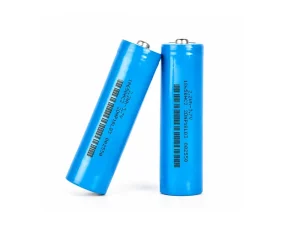
In the past, technology was not as advanced. Batteries were bigger and less efficient. However, lithium-ion technology has changed that.
The 18650 battery is a rechargeable lithium-ion battery. These batteries are popular primarily because of their compact size. They typically have a diameter of 18 mm and a total length of 65 mm. Because they take up little space, they are widely used in small electronic devices. These include flashlights, laptops, and more.
What does 18650 mean in these batteries? The numbers in the name of these lithium-ion batteries confuse everyone. However, these numbers have specific meanings, as they refer to the batteries’ size. 18 represents the diameter, while 65 indicates the length. This means these battery types have an 18 mm diameter and a 65 mm length. The 0 in the number shows that these batteries are cylindrical.
These 18650 batteries work similarly to other lithium-ion batteries. They have a small anode and cathode. When the battery charges, lithium moves and deposits on the anode. While the battery is being used, the lithium ions move back to the cathode to provide energy. This energy comes from a chemical reaction. Most commonly, 18650 batteries have a total capacity of 2,500 mAh to 3,500 mAh.
Remember, 18650 batteries come in different models and specifications. Each 18650 battery can offer different performance, longevity, and durability. The power requirement of the device in which the battery is being used also impacts the battery’s performance. In short, these 18650 batteries are small but offer decent performance for a wide range of electronic devices.
What Is a 21700 Battery?
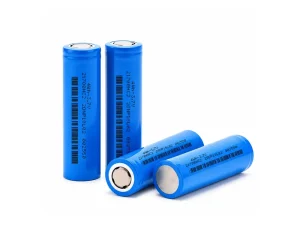
Many consider 21700 direct competitors to 18650 batteries. However, I believe these two batteries suit different devices. Because 21700 batteries are slightly larger, they fit in larger devices, and 18650 batteries fit in smaller ones.
21700 batteries are also larger cylindrical lithium-ion batteries. They have a diameter of 21mm and an overall length of 70 mm. More space lets manufacturers fit more material inside. This helps them increase battery capacity. So the devices using these batteries will last longer and perform efficiently.
What does 21700 mean in these batteries? Like 18650, the numbers in 21700 batteries also indicate their size and dimensions. 21 in the number indicates the diameter, while 70 refers to the size (length). This means these batteries are 70 mm long. Being larger in size allows manufacturers to add more material inside the battery.
This increases the capacity of these 21700 batteries. Most 21700 lithium-ion batteries have capacities ranging from 4,500 mAh to 5,000 mAh. Both 18650 and 21700 batteries have the same nominal voltage of 3.6V or 3.7V. Since these batteries have higher capacity, they are used in larger devices. Examples include larger flashlights, electric vehicles, cordless power tools, and more.
Manufacturers typically use multiple 21700 cells in battery packs. Why? This increases the battery pack’s capacity so it lasts longer. 18650 and 21700 batteries are different and suit different use cases. 18650 is best for compact devices. In contrast, 21700 is better suited for larger devices where more charging capacity matters.
18650 vs 21700 Batteries: Key Differences
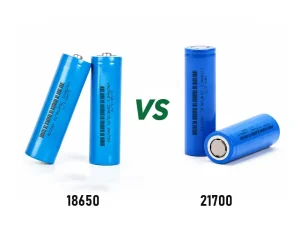
In the section below, I will discuss fundamental differences between 18650 and 21700 batteries.
1- Size & Dimensions
As mentioned above, 18650 batteries are compact and best suited for small devices. That’s because these batteries have a diameter of 18mm and a length of 65mm. In contrast, 21700 batteries are bigger, with a diameter of 21 mm and a length of 70 mm. This means 18650 batteries are 3mm narrower and 5mm shorter. This makes 18650 an ideal option for compact devices. Since 21700 batteries are bigger, they may not fit in compact devices. However, the larger size also means higher capacity.
2- Battery Capacity & Nominal Voltage
Battery capacity is typically measured in milliamp-hours (mAh). In simple terms, this capacity simply indicates how much charge a battery can store. A higher-capacity battery can power the device longer, and vice versa. 18650 lithium-ion batteries have a capacity of 2,500–3,500 mAh. This is because these lithium-ion batteries are compact.
Manufacturers have less space to add more material to increase capacity. In contrast, 21700 batteries have a capacity of 4,500–5,000 mAh. These batteries are larger and store more charge. So they can run the devices for longer. In terms of nominal voltage, both batteries are the same, with a nominal voltage of 3.6V.
3- Discharge Rate & Power Output
Discharge rate and power output are two important parameters. Discharge rate means how quickly a battery provides electrical current to the device. Power output refers to how long a battery can power a device. 21700 lithium-ion batteries offer higher power output mainly because of their larger size and capacity.
When it comes to discharge rate, both of these batteries offer an optimal discharge rate. Which of these two batteries offers a higher discharge rate depends on the model. Typically, 21700 is slightly ahead and provides a higher discharge rate. The maximum discharge rate of 18650 can be around 20A–30A. However, it is around 30A–45A in 21700 lithium-ion batteries.
4- Weight & Energy Density
18650 lithium-ion batteries are known for their compactness and lightweight design. These batteries can weigh around 40–50 grams. However, this weight can vary depending on the 18650 battery model. In contrast, 21700 lithium-ion batteries are heavier. Their weight ranges between 70 and 75 grams. This is because they’re larger and contain more material. Although 21700 batteries are heavier, they also have higher energy storage capacity. The energy density of these two battery types varies by model.
5- Charging Speed & Safety
Both 18650 and 21700 lithium-ion batteries come with fast charging. However, charging 21700 batteries takes longer than charging 18650 batteries. Why? This is because these lithium-ion batteries have higher capacity. So they store more electrical charge compared to 18650 batteries.
In contrast, 18650 batteries have less capacity and store less electrical charge. So these batteries can charge quickly. When it comes to safety, both are excellent. They use lithium-ion technology. However, make sure to charge them with the correct charger and don’t misuse them.
6- Cost & Affordability (Value)
18650 lithium-ion batteries cost less than 21700 batteries. Why? That’s because of size and capacity. As discussed above, 18650 lithium-ion batteries are compact. They have less internal space and use fewer materials. This reduces their charge-storage capacity, but it also lowers their prices.
On the other hand, 21700 lithium batteries are more expensive because they are larger. Manufacturers add more material in their internal space. This increases storage capacity but also increases cost. The per-cell cost of 18650 batteries is always lower than that of 21700 batteries. In terms of value, I consider 21700 a better option. The reason is that these batteries offer high capacity and can power the devices for a long time.
Applications of 18650 & 21700 Batteries
Both 18650 and 21700 lithium-ion batteries are equally good. However, they fit in different electronic devices. 18650 batteries are compact, so they suit compact devices. On the other hand, 21700 lithium-ion batteries are best suited for larger devices that require more power. Below is the table showing the application comparison of 18650 vs 21700 lithium-ion batteries:
| 18650 Battery Applications | 21700 Battery Applications |
| LED flashlights | High-performance flashlights |
| Laptops and portable electronics | Electric vehicles |
| Cordless drills and power tools | High-power cordless tools |
| Compact power banks | High-capacity power banks |
| Portable battery packs | Home energy storage systems |
Advantages & Disadvantages of 18650 and 21700 Batteries
Are you still confused about selection between 18650 and 21700 batteries? Worry not. Below, I’ll list the pros and cons of these batteries in tables. Understanding them will further clarify your confusion and ease your decision-making:
Advantages & Disadvantages of 18650 Batteries
| Advantages | Disadvantages |
| Compact and lightweight | Lower capacity |
| Widely available | More cells may be needed |
| Often affordable | Shorter runtime in some applications |
| Fits many devices | Limited by specific cell ratings |
Advantages & Disadvantages of 21700 Batteries
| Advantages | Disadvantages |
| Higher capacity per cell | Larger size |
| More energy per cell | Heavier |
| Can reduce cell count in some packs | May cost more per cell |
| Suitable for high-energy applications | Not compatible with all devices |
Frequently Asked Questions
Are 18650 and 21700 batteries interchangeable?
No. 18650 and 21700 batteries differ in size, dimensions, and capacity. They are not interchangeable, and you should not use them as alternatives to each other. Both batteries are designed for specific devices and should be used correctly.
Which battery lasts longer, 18650 or 21700?
21700 lithium-ion batteries typically last longer than 18650. This is because 21700 batteries typically have a capacity of around 5000 mAh. So they can power devices longer.
Are 21700 batteries safe?
Yes. Both 18650 and 21700 batteries use lithium-ion technology and are safe. They are less likely to leak or catch fire out of nowhere. However, you should still use them with caution to avoid any complications.
Conclusion: Which One Should You Choose, 18650 or 21700 Batteries?
Choosing between 18650 and 21700 batteries is a personal decision. If you’re still unsure, I recommend reviewing your device’s requirements. If your device is small and needs a compact battery, choosing 18650 makes sense. This battery is lightweight and affordable. However, its electrical charge storage capacity is low, which is a drawback.
If you want more storage capacity and longer runtime, a 21700 battery is the best option. These batteries are bigger in size with higher capacity. They can power devices for longer, but they’re also pricey. Remember, you must check the compatibility of your device with battery types before making a final decision. In this article, I have discussed everything about 18650 and 21700 batteries.