
There is a common but most confusing question: “What’s the difference between volts and amps?” In fact, everyone who plan to buy a battery gets confused when seeing volts and amps written on the batteries. Interestingly, knowing the basics of volts and amps is crucial to make the right battery selection. Some batteries have higher voltages and are suitable for powering high-power devices.
Both volts and amps are units of measurement for voltage and current, respectively. These two parameters determine which battery you should choose for your specific applications. If you don’t have a basic understanding of volts and amps, worry not! In this article, I will explain the basics of volts and amps and their major differences. Let’s get started.
What is a Volt?
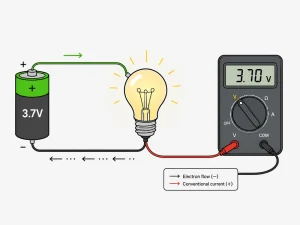
First things first – volt is the unit of voltage. It is represented by V. Voltage, measured in volts, is the electrical potential difference within a circuit. Higher voltage means a greater electrical potential difference between two points. In other words, higher voltage means more pressure, which pushes electrons to flow.
To understand voltage, you’ll have to look at how electricity actually works. As you know, electricity is the result of the flow of small particles known as electrons. These electrons flow through a wire. If there is high voltage, it means more potential energy is available to push the electrons.
On the other hand, lower voltage means there is less potential energy to push these electrons through. High-power devices generally operate at higher voltages. Why? That’s because those devices require a higher electron flow. So higher voltage provides more pressure, which pushes electrons to move faster. This voltage has its unit known as “Volt”.
To be more scientific, one volt is equivalent to one joule of energy per coulomb of charge. Suppose you have two lithium-ion batteries with voltages of 1.7V and 3.7V. In this case, a lithium-ion battery with a voltage of 3.7V will offer more energy for the electrons to move. This means this battery will easily run devices with higher energy consumption and vice versa. Interestingly, volt is not a new unit. Instead, it was first invented back in the 1800s by Alessandro Volta.
Voltage Formula
Voltage can be calculated by a simple formula, which is as follows:
V = I × R
This formula comes from Ohm’s law, which states that voltage equals current multiplied by resistance. If resistance is constant, voltage is directly proportional to current. If you increase the current, the voltage will increase. Higher voltage provides more potential energy to push more electrons, increasing the current (flow rate).
What is an Ampere (amp)?
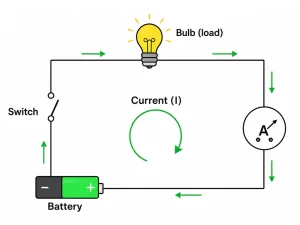
An ampere (amp) is the unit of electric current. It indicates the amount of charge flowing through a system (wire or circuit) at any given time. A high ampere rating means there is more electric current. This means more electrons are flowing through the system. Amps are one of the most important parameters in electricity.
As I said above, electricity results from the flow of charges (electrons). Ampere defines the rate of flow of these charges. If more charges or electrons pass through a wire, the current increases. Remember, voltage and current are directly proportional. If there is more current, there is more potential energy, which pushes the electrons to move.
Batteries have different amp ratings. Some batteries have a higher amp rating and can deliver more current to power devices. In contrast, small batteries generally have lower amp ratings. They are only suitable for running small gadgets or devices such as smartphones or flashlights. When buying a battery, you must check both the ampere and voltage ratings.
Interestingly, different devices or wires have different maximum current-wielding ratings. Suppose your wire is weak and your battery delivers more current to it. In such cases, the wire will overheat, and high current can be dangerous, potentially causing a fire. That’s why, for higher amps, you should always choose a wire with a higher gauge.
Ampere Formula
Similarly to volts, amperes of a circuit can be calculated by a simple formula, which is given below:
I = V / R
Suppose you have a lithium-ion battery or lead-acid batteries with a voltage rating of 220. Its resistance is 6 ohms. In this case, your battery has the following current rating:
I = 12 / 6 = 2 amperes
This means your battery will give 2 amperes of output to run different devices. If the device you run requires more than 2 amps, your battery won’t be able to power it. The next question you might ask is whether a high-amp or low-amp battery is better. Actually, this depends on the type of use you want to get from the battery.
Suppose you want to run devices that have higher current requirements. In such a case, you’ll have to buy a battery with a higher amperage rating. In contrast, batteries with low amperage will work fine if your devices require low amperage. Remember, when buying a battery, ensure the amp and voltage ratings match those of both your devices and the battery you choose.
Relationship Between Volts and Amps
Both voltage and amperes are closely related. In fact, batteries with higher voltage generally deliver more current and vice versa. Let’s look at the formula for finding ampere:
I = V / R
This indicates that voltage and current are directly proportional. However, the resistance plays a key role in the relationship between voltage and current. If a circuit has no constant resistance, the voltage and current can become unrelated to each other. Why? The reason is that the circuit’s resistance hinders the flow of electrons.
If there is more voltage, there is more pressure pushing the electrons. However, the system has higher resistance. Although the higher voltage pushes the charges strongly, the resistance reduces their flow. As a result, the current (amperes) does not increase despite the higher voltage in the electrical circuit.
However, let’s assume a circuit with a constant resistance. That’s where the voltage and current become closely related. If you increase the voltage, the current inside the circuit will increase too. Remember, many batteries have resistance. As a result, voltage and current may not be directly proportional due to resistance.
Volts vs Amps: Key Differences
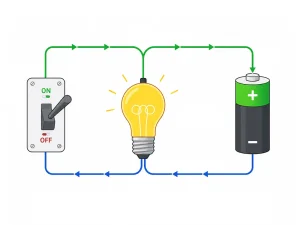
Volts and amps are the units of voltage and current, respectively. Voltage indicates the electrical potential difference in a circuit. On the other hand, amps indicate the rate of flow of charges (electrons) through a circuit or a wire. Higher voltage means there is more potential energy in the circuit, pushing the electrons. As a result, the movement of electrons increases.
When electron movement increases, does that simply cause the charge flow to increase, right? As a result, the current in the circuit also increases. This means that both parameters are directly related to each other, provided that the resistance is not fluctuating. On the other hand, amperes indicate the flow of charges through a wire or an electrical circuit.
For batteries, these two parameters mean two different properties. For example, the voltage of a battery indicates the energy available in the battery. On the other hand, an ampere indicates how much energy the battery delivers to run a device. Below is the table giving a quick overview of the differences between these two units:
| Volts (V) | Amps (A) |
| Electrical pressure (push) | Flow of electricity |
| Symbol: V | Symbol: A |
| Exists without flow | Only when current flows |
| Measured as energy per charge | Measured as amount of charge flow |
| Formula: V = I × R | Formula: I = V ÷ R |
| Higher volts = stronger push | Higher amps = more flow |
| Example: battery voltage (12V, 24V) | Example: battery current (Ah, load capacity) |
What is a Watt & How Does it Relate to Volts and Amps
Watt is another important unit used in electrical components and devices. It indicates power, which is the total amount of energy produced or delivered by a system or a battery. Interestingly, both voltage (volts) and current (amps) influence the power a battery or system generates. The formula to find watts is as follows:
P = V × I
Suppose you are using a small battery that delivers 12 volts and 1 ampere. In this case:
P = 12 × 1 = 12 watt
Simply put, the watt depends on both voltage and current. If you increase voltage or current, the wattage will increase and vice versa. However, if you decrease the current and increase the voltage, this relation will change. Many people believe that higher voltage always increases wattage, but this is a misconception.
Increasing the voltage will only increase the wattage if the current is not reduced. If you increase voltage but decrease current, the wattage (power) will not increase. Remember, different devices or electronic appliances have different power ratings. Devices with higher power ratings require higher voltage and amperage for smooth operation. To power such a device, you’ll need a battery that is rated for higher voltage and current.
Frequently Asked Questions
Is 12 amps the same as 12 volts?
No. Both amps and volts are units that indicate different parameters. Amperes indicate the flow of charges (electrons), whereas volts indicate electrical potential differences. In other words, volts indicate the force of current, while amperes indicate the flow of current.
How many volts does 1 amp have?
There is no exact voltage for a 1-amp system. The reason is that the voltage an ampere can produce depends on the resistance. If the resistance is 5 ohms, then the voltage for 1 ampere would be 5V. Here is the formula to find the rate of difference in amperes:
V = I × R
What is the power in the electrical devices?
Power, measured in watts, is the rate at which energy is delivered by the battery. The battery’s current and voltage determine its power. It is actually the output battery that powers different devices. Here is the formula to find the power:
Power = Voltage × Current
Conclusion
In conclusion, both amps and volts are two different units. Amps indicate electric current in a circuit, while volts indicate voltage. Remember, voltage and current are not the same thing. Voltage indicates the force of current, which is very simple. On the other hand, electric current refers to the flow of charges or electrons in the electric circuit. If you’re buying a battery, I recommend considering both its volts and amperes. This will help you choose the right battery that offers optimal power to run your electronic devices.