
In the market, there are different types of batteries available. Their sizes and capacities differ. Batteries with higher capacities generally offer longer runtime. However, you would want to know the exact run time of a battery when buying. This raises a question: How to calculate battery runtime?
Knowing a battery’s runtime before buying is essential. It helps you decide whether a specific battery can meet your device’s power consumption for specific durations. As a result, you make wise decisions when purchasing batteries. In this article, I will discuss battery runtime and how you can calculate it. So, let’s get started.
What is Battery Run Time?
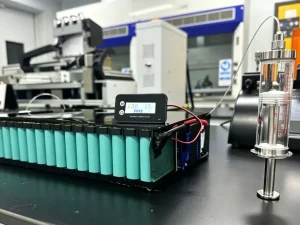
Battery runtime simply means how long a battery can power a specific device. In other words, it tells how long a battery can keep powering devices before completely discharging its stored energy. Batteries with higher capacity generally offer longer runtime. Note that the battery’s runtime also depends on the device it’s used with.
Suppose you have a high-capacity battery. However, your specific device running on a battery consumes high power. This will reduce the battery’s runtime despite its higher capacity. The reason is that the device will quickly draw all the stored energy from the battery. Simply put, battery runtime depends on two main factors.
These include the battery’s capacity and the power consumption of devices running on it. As I said earlier, knowing the battery’s runtime helps in the buying process. You can estimate battery runtime and decide whether it is optimal for your custom use. The runtime of batteries helps in better power management.
As you know, different appliances in homes have different power ratings. For example, home bulbs have 12W ratings while ceiling fans have 40 to 50 watt ratings. Knowing the runtime lets you estimate how long your device will keep running on battery. If the battery runtime is shorter, you can switch off some appliances.
This will help increase runtime, as fewer appliances will use less energy. Batteries used in smartphones, laptops, and other devices have different runtimes. That’s because these devices have different power consumption. Even a battery with the same capacity will give different runtimes when used in different devices.
How To Calculate Battery Run Time?

As I said earlier, battery run time depends on two key factors. One of them is the battery’s capacity. This means how much energy a battery can store when it is fully charged. The second thing is how much power or current the battery draws when in use. Simply put, it indicates the power consumption of a device powered by a battery.
If you know the battery’s capacity and the current being drawn from it, you can calculate its runtime. Here is the exact formula to calculate the run time of the battery:
Time (hours) = Capacity (Ah) ÷ Current (I)
The capacity of a battery is generally indicated in Ah (Ampere-hours). On the other hand, current is indicated by the unit “Ampere”.
Suppose you have a 20 Ah battery. The device connected to this battery is drawing 2 amperes. By putting the value in the above formula, you’ll get the exact run time:
Time = 20 ÷ 2 = 10 hours.
This means a 20Ah battery will power your device continuously for 10 hours before requiring recharging. Remember, this 10-hour runtime is not 100% accurate, as it can affect the battery’s age. Generally, older batteries offer slightly less runtime than newer ones. However, 10 hours is a good estimate: in the worst case, you might only get 8 or 9 hours.
Battery Run Time Calculation if Battery Capacity is in mAh
Battery capacity can be expressed in different units. However, the most common unit used for medium to large-sized batteries is Ah (Amp-hour). However, some batteries are used for smaller devices. The capacity of these batteries is very small. The unit used to express their capacity is mAh.
Devices that use these smaller batteries draw current in milliamperes (a very small amount). When calculating the run time of such smaller batteries, you can use the following formula:
Time (hours) = Capacity (mAh) ÷ Current (mA)
Suppose you have a battery with a storage capacity of 50 mAh. The device that uses this battery draws 2 mA of current.
Time = 50 ÷ 2 = 25 hours.
The formula remains the same, regardless of whether the capacity is expressed in Ah or mAh. If capacity is in mAh, then the current drawn from the battery would also be in mA. Similarly, if the storage capacity is measured in Ah, then the current would be written in amperes, not milliamperes. You’ll notice that smartphone battery sizes are generally written in mAh because they are very small.
You can find the smartphone’s runtime using the formula above. Currently, smartphone user manuals are generally written for that specific smartphone. Remember, the runtime you get using the above formula can vary slightly depending on many factors. These include smartphone use, battery conditions, temperatures, and more.
Battery Run Time Calculation if Battery Capacity is in Watt-Hours (Wh)
Some batteries have their capacity listed in watt-hours (Wh). This is common on power bank and laptop batteries. Remember, Wh becomes crucial for checking the runtime of devices whose power consumption is measured in watts. For example, home bulbs are typically 12 watts. On the other hand, ceiling fans generally have a power rating of 40 watts.
Below is the formula for calculating device runtime when the battery capacity is in Wh.
Time (hours) = Capacity (Wh) ÷ Power (W)
Suppose you have a 50 Wh battery and run a ceiling fan on it. The power rating of this ceiling fan is 40 watts.
Time (hours) = 50 ÷ 40 = 1.25 hours.
This means your ceiling fan will run on battery for 1.25 hours. It is worth noting that people use UPS units with batteries as a backup power source. You can determine the runtime of the batteries by measuring the power rating of the devices you want to run on them during outage hours.
Suppose you want 2 fans and two bulbs running on a battery for 2 hours. But you won’t know which size battery will meet these power needs. In such a case, your appliance (2 fans and 2 bulbs) will consume 104W. Here is how you can find the exact battery size you need:
Capacity of Battery (Wh) = Power Ratings (W) × Run Time
Capacity of Battery (Wh) = 104 × 2 hours = 208 Wh
This means you’ll need a 208 Wh-capacity battery with a UPS. This system will easily run your two fans and two lights during an electricity outage. This means the above formula not only helps determine the battery’s runtime. In fact, if you know the runtime and power rating, it can help you choose the right battery size for your home.
How to Calculate the Runtime of a Smartphone Battery?
There are different battery sizes used in smartphones. Old smartphones used to come with batteries with a capacity of around 3000-3500 mAh. However, manufacturers now use lithium batteries with higher capacities, ranging from 5000 to 7000 mAh. On average, smartphone batteries have a capacity of 5000 mAh. These devices draw about 400 mA from these batteries while operating.
Run Time = 5000 ÷ 400 = 12.5 hours.
Suppose your smartphone has a different battery capacity than 5000 mAh. You can add the specific battery capacity and the current used to find the runtime of your specific smartphone.
How to Calculate the Runtime of a Laptop Battery?
Just like smartphones, laptops also have different batteries with varying capacities. However, most laptops come with a 60Wh battery. On average, a laptop with a 60Wh battery has a power rating of 15 W. Remember, these specifications can vary depending on the model and size of your laptop.
Run Time = 60 ÷ 15 = 4 Hours.
The runtime of the laptop depends on the size of the battery (capacity) used in the laptop. If a laptop has a larger battery and optimized power consumption, its runtime would be higher. You can find the runtime using the formula above for all types of laptops. All you need is the capacity of the laptop’s battery and the current the laptop draws while working.
Key Factors That Affect Battery Run Time

As I said earlier, the battery runtime is not 100% accurate. If you calculate 2 hours of runtime for the battery, you should expect a 10% margin. This means your battery will last less than two hours, i.e., 1 hour and 40 minutes. Why? The reason is that various factors affect the performance and runtime of the battery.
In the upcoming section, I will discuss these factors and how they affect a battery’s runtime.
1- Power Consumption
Power consumption is a fundamental factor that affects runtime. If you run a smaller device on battery power, you’ll notice a higher runtime. The reason is that smaller devices generally consume less power. On the other hand, larger devices with higher power ratings require more energy for operation. As a result, they quickly consume the battery’s stored energy, resulting in shorter run time. When your home is running on battery backup, keep the higher-power-consuming devices off. This will increase the run time of your battery.
2- Battery Size & Capacity
As I mentioned above, different battery sizes are available. They differ in their chemistry and capacities. You should choose a battery with a higher capacity if you want longer runtime. The battery with less capacity will store less energy. When it is used, it will power the device for shorter durations. I recommend that you carefully analyze your device’s energy consumption. This will help you choose a battery capacity that meets the power demands of your home appliance.
3- Battery Efficiency & Condition
No battery in this world offers 100% efficiency. Even the highest-efficiency lithium or lead-acid batteries have 75 to 85% efficiency. The reason is that a small amount of stored energy is often lost due to different factors. When you calculate the runtime, you use the battery’s full capacity in the formula.
However, the actual capacity is slightly lower due to less battery efficiency. As a result, the run time of the battery in the real world is slightly less than what you get in calculations. Apart from that, the battery’s condition also matters when estimating run time. Older batteries have lower efficiency because their cells become weaker and less efficient. As a result, older batteries have less runtime than newer or well-maintained batteries.
4- Depth of Discharge
Depth of discharge is another crucial factor that affects battery runtime. It indicates how much stored energy from the battery is used before it undergoes recharging. If the battery is fully drained, its efficiency is affected. Therefore, modern batteries are designed to deliver up to 80% of their capacity. Once their charge decreases to 20%, they stop working. Remaining 20% of stored energy is not usable.
Your system will stop working when the battery is this low. Manufacturers keep this margin to ensure batteries remain in good health for a long time. This means only 70% of the battery’s stored energy can be used in real-world conditions. Roughly 10% lost to inefficiency and 20% reserved as depth of discharge. When calculating runtime, consider these factors to estimate the battery’s runtime accurately.
5- Temperature & Extreme Conditions
If the battery is being used in high-temperature conditions, you should expect lower run time. Why? The reason is that high temperatures speed up the chemical reaction happening inside the battery. Due to this rapid reaction, more energy is wasted as heat. As a result, the battery’s runtime will decrease.
On the other hand, at a moderate temperature, the reaction inside the battery happens at a moderate speed. This results in lower energy loss as heat, leading to better battery runtime. Not only temperature, but also extreme conditions such as high pressure and high humidity. If you want better runtime, keep the battery at room temperature.
Conclusion
In conclusion, different batteries have different runtimes and backup durations. But when you’re buying a battery, knowing how much time it will power your devices is necessary. This helps in choosing the right battery that complements the power consumption of your devices.
In this article, I explain how to calculate a battery’s runtime using simple calculations. Additionally, battery runtime depends on various factors. The run time you get from the calculation is not always what you get in real time. You should expect a 10% reduction in runtime compared to the calculated time.