
LiPo batteries are widely used in various devices. Their higher energy density and compactness make them an ideal option. However, these batteries are useless without the right connectors. Interestingly, various LiPo battery connector types are available on the market. Each of these connectors is unique in terms of features and performance.
The primary role of these connectors is to connect the battery to the device it powers. In other words, connectors supply power from the battery’s stored energy to the device. Some types have a higher power rating, while others compromise on power. In this article, I will explain different types of LiPo battery connectors. So, let’s get started.
What are LiPo Battery Connectors?
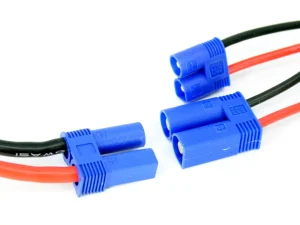
Before discussing various types, I will first explain the basics of connectors. Having a basic understanding of connectors will help you grasp their types more effectively.
A connector is a small component attached to one end of a battery’s wire. This component is secured to the device that the battery powers. This way, it connects batteries with devices and supplies current from the battery to the device. Without a connector, the devices cannot use the battery’s stored power. Connectors with different sizes and shapes are available in the market.
Lithium polymer batteries store energy during charging. However, they are connected to the devices via a wire with a connector at one end. This connector ensures a strong connection between the battery and devices. These devices can be anything, such as drones and RVs. Interestingly, these connectors offer very low (negligible) resistance to current.
This means they flow the electricity smoothly from the battery to the devices. As there is no current resistance, there is no significant heat generation. If there were prominent heat generation, it would overheat the devices. As I mentioned above, LiPo battery connectors can come in different sizes. Small connectors can handle low power and are suitable for small devices.
In contrast, larger connectors can handle high power, making them ideal for bigger devices. What makes these connectors stand out is their locking design. This means that once locked inside the devices, these connectors do not become loose or be removed accidentally. These connectors are easy to unplug once you want to disconnect the battery and device. Remember, locking connectors do not get loose even if the battery or device undergoes harsh vibration or movement.
What are the Types of LiPo Battery Connectors?
As I said earlier, there are different types of lithium polymer battery connectors. These connectors differ from one another in many respects. In the section below, I will explain these connector types.
1- JST Connectors
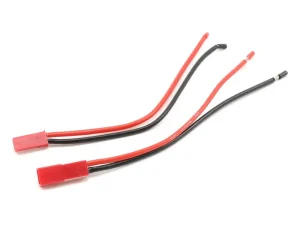
JST connectors are known for their compact size. In fact, that’s the major selling point of these connectors. As you know, some devices, such as mini drones, have limited space for batteries, right? In this case, these JST connectors come in handy. They can be fit into mini devices and ensure a strong connection between the LiPo battery and the device.
Since these connectors are small, their current carrying capacity is lower. They can carry a current of around 5–10 amps, which is a drawback. This lower capacity makes them unsuitable for use with large devices. If you use them in large devices, they may overheat. Additionally, these connectors also have subtypes such as Micro JST, JST-PH, and so on.
2- Deans Connector (T-Plug)
Deans connectors are a superior option to the previously discussed JST connectors. Why? First of all, these connectors offer a higher current-carrying capacity of up to 50 amperes. This means these connectors can be used with larger devices. Secondly, Deans connectors offer a more secure connection with devices. Unlike JST connectors, these connectors don’t get accidentally unplugged.
When it comes to usability, Deans connectors are used in RVs, cars, boats, and airsoft guns. Interestingly, these connectors are made with conductive materials. So they show little to no resistance to current. As a result, they generate no heat, which could affect device or battery performance. These LiPo connectors can power even large devices with ease.
3- XT30 & XT60 Connectors
Many modern devices, including drones, come with XT30 and XT60 connectors. Both of these connectors are similar in terms of their efficiency and working. However, the major difference between these connectors lies in their current-carrying capacity. The XT30 is a small connector with lower current capacity. This means this connector is suitable for powering small devices.
In contrast, XT60 connectors are larger and have a higher current-carrying capacity of up to 60 amperes. As a result, these connectors offer better performance than XT30 connectors. Additionally, you’ll love how easy it is to plug and unplug these XT60 connectors. Although this connector is easy to plug and unplug, it does not come out accidentally because it offers a strong connection.
4- XT90 Connectors
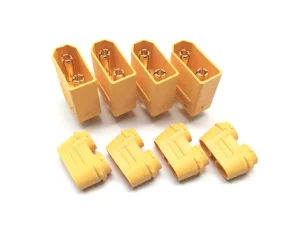
The XT90 is a more powerful and durable connector than the XT60. The reason is that this connector can handle a high current of around 90 amperes. In fact, it can even carry a current of 100 amperes in some cases. Additionally, it comes with anti-spark protection, which is a significant advantage. Why? The reason is that this connector is powerful and is used with heavy-duty devices.
The battery connection is also big. So when you connect a much larger battery to the device, the risk of sparks is high. However, this XT90 connector does not guarantee that no spark is produced, which would ensure the safety of both the battery and the device. The electrical conductivity of these XT90 connectors is also excellent. During use, it does not resist the flow of charges, which could generate heat.
5- EC2, EC3, and EC5 Connectors
EC2, EC3, and EC5 are connector series used in various devices. The major difference between these connectors is their current-carrying capacity. For example, EC2 is the basic type with very low current capacity. That’s why it is only used in small devices, such as mini RVs and mini drones. When used with a large device, it will overheat. Both EC3 and EC5 perform better.
Below is the table showing the current carrying capacity of these connectors:
| Connector | Current Capacity | Ideal Uses |
| EC2 | 20A | Small devices |
| EC3 | Around 60A | Medium RC cars and airplanes |
| EC5 | Up to 120A | High-power RC systems and heavy-duty setups |
Interestingly, these EC series connectors come with tight snap-lock mechanisms. Once locked, they remain firm and keep the connection between battery and device secure. Even harsh vibration and unwanted movement cannot loosen their connection. Remember, the costs of EC2, EC3, and EC5 differ. The EC5 connector is the most expensive, followed by the EC3 and EC2 connectors.
6- Anderson Powerpole Connector
Anderson PowerPole connectors come in different current-carrying capacities. These include 15 amperes, 30 amperes, 45 amperes, and so on. You can choose an Anderson pole connector depending on your specific use case. Additionally, these connectors feature a genderless design, a unique feature.
This genderless connection means there is no need to worry about male and female plugs. These LiPo connectors are suitable for DC electrical systems. Among all the types, these Anderson powerpole connectors are the most robust. They can easily withstand years of use (connect/disconnect). When it comes to resistance, Anderson PowerPole connectors offer low resistance to current.
7- EC8 Connectors
EC5 and XT90 are excellent in terms of their power and current carrying capacity, right? However, this EC8 goes one step ahead in terms of performance. It can carry over 100 amperes of current. This means it can easily run heavy-duty devices without any issues. In addition to high power, these connectors are very durable.
Their chances of failure when connecting batteries to devices are very low. This makes these EC8 connectors a reliable option for users with high-end devices. There is one drawback: these EC8 connectors are large. However, this is not an issue, as these connectors are generally used in larger devices. Remember, the prices of these EC8 connectors are higher than all other EC series connectors.
Frequently Asked Questions
What are the different types of LiPo battery connectors?
As discussed above, there are different types of LiPo battery connectors. They differ primarily in current-carrying capacity. Here are those types:
- JST Connector
- XT30 Connector
- XT60 Connector
- XT90 Connector
- Deans Connector
- EC3, EC5, and EC8 Connectors
- Anderson Powerpole Connectors
Which is the most commonly used LiPo connector?
XT60 is the most common LiPo connector. The reason is that it offers an excellent current-carrying capacity of around 60 amperes. It can easily run small to medium devices without overheating.
What happens if I use a low-rated connector for high current?
Using a low-rated connector for high current is a bad idea. If you do so, the connector will overheat due to high load or current. In the worst case, this overheating can melt the connection. You should always use a rated connector to ensure the safety of the battery, device, and connector.
Conclusion
Let’s conclude – Connectors are a very important component for the smooth operation of different devices. Without these devices, such as drones, we would not run. Why? That’s because these connectors actually connect batteries to devices. This way, they supply power from the battery to the device, allowing it to run smoothly.
Remember, choosing the right LiPo battery connector is crucial. You should choose a connector rated for the specific current your battery delivers. There is a wide range of LiPo batteries available in the market. I recommend opting for XT60 in most cases due to their excellent performance. In this article, I have discussed all the major types of these connectors.