








4S vs 6S LiPo: What’s the Difference? This is the first question that comes to mind when dealing with LiPo batteries. Actually, LiPo batteries have become a must-have in modern electronics. You can find them in racing drones, RC cars, airplanes, and robotics. The reason for this wide, trusted usability lies in their higher performance and lightweight design.
However, when you buy the LiPo battery, you often hear the terms 4S and 6S. These terms might seem technical to you; in reality, these are the two most common LiPo battery types. To clarify the differences between these LiPo types, I will differentiate them in several ways in this guide. You will know how they differ and which one truly stands out. So let’s get started.
Overview of 4S and 6S LiPo: What Does “S” Mean?
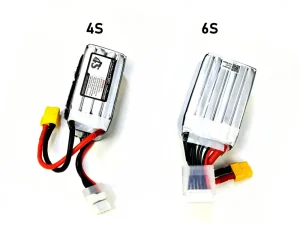
A 4S or 6S LiPo battery shows the number of battery cells connected together inside a LiPo battery pack. The word S here means series, and the numbers 4 and 6 indicate how many cells are connected in the row. So a 4S LiPo is the battery that contains four cells, and a 6S LiPo is the battery that contains six cells.
Remember, the S number is also related to each battery’s voltage. The higher that number, the higher the battery voltage will be. This voltage difference is what makes each LiPo battery option’s suitability different. For example, a 4S LiPo is chosen when the balance of performance and control is of utmost importance. However, a 6S is a slightly more advanced battery that requires a higher skill level and extra safety while handling.
4S vs 6S LiPo: Key Differences
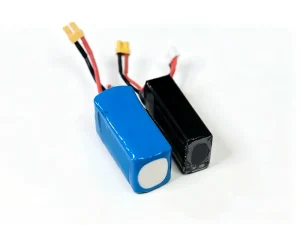
Now you have a basic know-how of each LiPo battery and understand they are not the same thing. Right? The next question is what actually makes them so different? Let’s find out the answer by comparing both 4S and 6S head-to-head.
1- Nominal Voltage & Voltage When Fully Charged
The first, most important difference between 4S and 6S LiPo is their nominal and fully charged voltages. Nominal basically refers to the average working voltage of the battery during normal use. Every LiPo battery cell normally has a nominal voltage of 3.7 volts. As in LiPo, the cells are connected in series, so when you multiply them, the result will be the nominal voltage. In the case of 4S LiPo, this nominal voltage is 14.8V (3.7 × 4).
However, the 6S LiPo gives a nominal voltage of 22.2V (3.7×6). But when each LiPo battery is fully charged, each cell voltage rises to about 4.2 volts instead of 3.7. Because of this, a 4S LiPo battery shows a fully charged voltage of 16.8V. On the flip side, a fully charged 6S battery reaches 25.2V. Remember, this higher voltage provides the system with extra power only at the start of use. As the battery continues working, the voltage slowly drops back.
2- Current Draw & Power Output
Current draw and power output are two critical factors that clearly explain the difference between 4S and 6S LiPo batteries. Current draw is the amount of electrical current the device needs when running. However, Power output is the amount of energy the battery sends to the device motor. Now, 6S LiPo has a higher voltage, right?
As a result, it can give the device more power without needing to push too much current. It means the system will work more effectively. The lower current generates less heat in the wires. On the other hand, a 4S battery has a lower voltage than a 3S battery. That means it has to pull more current to produce the same level of power. As a result, when more current flows, the chance of heat generation in the wires increases, which might reduce lifespan.
3- Battery Charging & Discharging Rate
Both 6S and 4S have varying charging and discharging rates. These rates tell you about how quickly a battery fills with energy and how quickly it releases that energy. Generally, both LiPo batteries follow the same charging rule. They should be charged slowly, often at 1C, which is their safe limit. However, 6S LiPo batteries contain more cells in series and therefore have greater 에너지 저장 capacity. That’s why they take more time to charge fully.
But once they are charged, the 6S battery delivers power more easily, efficiently, and quickly. It uses a higher voltage, so it does not need to push as much current. Conversely, the 4S LiPo is very fast in terms of charging. The reason is again the smaller number of cells that hold less energy. So it fully charges faster. However, when it comes to delivering the power (discharging), it is not that efficient. The 4S battery has to work harder, drawing more current to achieve similar performance.
4- Speed vs Performance
Speed and performance in 4S and 6S LiPo batteries depend mainly on the voltage the battery provides to the device’s motor. Voltage is like the electrical strength that makes the motor spin. The higher the voltage, the faster the device motor will run. So, in terms of speed, 6S batteries clearly win. Why? Because a 6S battery has more cells, it gives a stronger electrical strength. This allows the motor to spin faster and respond more quickly.
However, this high speed makes these 6S batteries aggressive in performance, which can be difficult for beginners. On the flip side, a 4S battery has fewer cells, so it delivers a lower electrical output. It means the device’s motor will not spin as fast as it would on a 6S system. However, this lower speed is not its weakness. It actually makes the 4S battery perform more smoothly and be easier to control, especially for newbies.
5- Battery Weight, Size & Handling
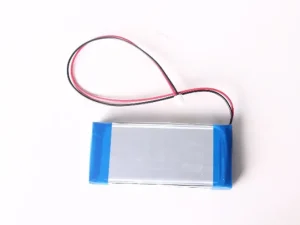
Battery weight, size, and ease of handling are critical factors to consider. Interestingly, both 4S and 6S batteries differ in all three aspects. Why? That’s because of the different number of cells present in these batteries. As discussed above, 6S batteries have 6 cells, whereas 4S batteries have 4 cells. With more cells, the 6S batteries are heavier, bulkier, and larger. Handling these batteries is also a bit more difficult due to their heavier weight. A smaller number of cells in 4S batteries makes them relatively compact and lighter.
But this bulk size and weight come with higher power capability. In other words, 6S batteries are bigger and heavier but also offer higher power. So it often balances out for large, strong electronics. In contrast, 4S batteries have only four cells, making them lighter and easier to handle. Additionally, their smaller size fits perfectly into smaller, smarter devices. Their lower weight does not place a burden on the device’s motor.
6- Best Use Cases
4S and 6S LiPo batteries differ in their applications as well. 4S LiPo batteries are considered best for lighter applications. Why? The reason is that these batteries provide less power and voltage. They can only handle lighter applications that do not require extreme power. When used in high-power-consuming devices, these batteries may not perform as well.
On the other hand, 6S LiPo batteries are best for performance. They offer high voltage due to their 6 cells and better power. Below is a table comparing the applications of these two LiPo batteries.
| 4S Battery Applications | 6S Battery Applications |
| Training drones | Professional racing drones (FPV racing) |
| RC cars (hobby level) | High-performance RC cars (racing level) |
| Basic RC airplanes | Large and powerful RC airplanes |
| Robotics projects & DIY electronics | Heavy-load / industrial drones |
| Casual FPV flying | Advanced robotics systems |
7- Cost & Affordability
Last but not least, cost is another factor that strongly differentiates the 6S and 4S LiPo. The cost basically depends on the advancement, structure, and design. As you can see, the 6S is a highly advanced LiPo battery with more cells. Also, it is designed with accuracy to ensure fast, high performance. That’s why it costs more. Its advanced parts, like motors, ESCs, and chargers, need complex manufacturing, which makes it expensive.
However, for critical and high-performance applications, this higher cost compensates. On the flip side, the 4S is a highly affordable option with few cells and a basic design. It is mainly used in basic mid-level devices. That’s why manufacturers don’t add complex components like ESCs, motors, or heavy-duty connectors. All this reduces the overall production cost and makes it less expensive.
4S vs 6S: Which One Should You Choose?
As I said above, both of these LiPo batteries have different use cases. This makes their selection a bit easier, even if you’re a newbie. Whether you should use a 4S or a 6S depends on your level of experience and needs.
I recommend choosing a 4S LiPo battery if you’re a beginner. These batteries are easier to control and very affordable. However, they provide less voltage, compromise speed, and power. If your application requires more power, choosing a 6S battery is the best option. In these batteries, you’ll get higher voltage, power, speed, and overall performance.
Remember, each of these LiPo batteries has its own strengths and weaknesses. So the final choice should be according to your needs. If you want a high-performance battery with high speed and voltage, 6S must be your choice. But remember, these 고속 배터리 require a higher level of skill to operate. Their higher speed might be aggressive for some uses, so be careful. Also, the 6S LiPo is very expensive.
If you are choosing the battery for general use and are on a tight budget, you should not go for the 6S. On the flip side, if you are someone just learning about LiPo batteries, 4S is the best option. It comes with a basic design, easy handling, and affordable prices. Also, a balanced speed will be handy for controlling it with basic devices. But keep in mind, its lower voltage makes it less responsive. The device motors spin more slowly, and overall performance feels less powerful.
결론
LiPo batteries are among the most favored choices for modern electronics. However, these batteries come in various types based on the number of cells. Among those, the 4S and 6S stand out for their versatility. However, both of these have their distinct variations. For example, the 4S LiPo is known for its affordability, balanced speed, and performance. But it might not fit in higher-performance devices. When it comes to the 6S LiPo, it is a heavy-duty battery with higher voltage, speed, size, and weight. It delivers stronger power, faster speed, and quicker response. The final choice depends on your project’s needs. These are the differences I discussed to help you make the right selection.