







Have you ever had someone say their battery performance decreased after the winter season? This is very common, when you store them for winter and then use them again afterward, they are no longer the same. Right? This problem occurs when the battery is not stored correctly. This brings a question: How to store lithium batteries for the winter?
As I mentioned in previous articles, lithium batteries are highly sensitive to various parameters. In winter, the temperature decreases, which affects the electrolyte present inside the battery. As a result, the battery efficiency reduces, causing performance issues. In this article, I’ll help you avoid problems in winter by teaching you how to store your lithium battery properly during the winter months.
Why Does the Right Storage of Battery Matters in Cold Weather?

Let’s understand why proper storage is essential for lithium batteries. Remember, in winter, the temperature in some areas can even drop below 0 degrees Celsius. When batteries are exposed to such temperatures, they are more likely to experience issues. Here are some potential issues that may arise when your lithium battery is not stored correctly.
- Corrosion on metal parts: When the lithium battery is not stored correctly, its metal parts can get corroded. Why? The reason is that these parts are exposed to moisture and condensed water droplets. Due to this, the metal parts, including the battery terminals, start to corrode.
- Affects Battery Chemistry: As you know, lithium batteries work by the movement of lithium ions between electrodes. Right? If the battery remains at a low temperature, this movement of ions reduces. As a result, the chemistry of lithium batteries gets affected, making the battery less efficient.
- Freezing of Lithium Ions: At very low temperatures, the lithium ions start to freeze. As a result, they form a layer on the anode. This layer of ions on the anode can damage the anode of a lithium battery. Even when brought to room temperature, the anode of the battery won’t revive at all.
- Reduced Capacity & Poor Performance: The capacity of lithium batteries reduces when they are stored in the wrong place. The freezing of lithium ions affects the overall performance of these batteries. Therefore, when they are used next time, their charge-holding capacity will be very low. As a result, they won’t perform well and their persistence will be affected.
How to Store Lithium Batteries for the Winter?
Got the idea why lithium batteries should be stored carefully? To me, bad storage of the lithium battery seems like damaging your batteries with your own hands. Want to learn how to store the battery in the cold season? In the section below, I will explain lithium battery storage in simple steps. In fact, these steps will help you keep your batteries long-lasting.
1- Clean the Exterior of the Battery
When the lithium battery is in use, it sometimes goes into harsh conditions. It remains exposed to moisture, dirt, and debris. Right? Before storing it, you’ll need to clean the exterior of the battery.. The reason is that this cleaning will remove all the dust.
If it is not removed, it can then seep inside the battery when it remains stored. As a result, this dust can affect the performance of your lithium battery. For cleaning, I recommend using a dry cloth (microfiber) instead of using drops of water. The dry cleaning will remove dirt, moisture, and other impurities.
2- Keep SOC around 50 to 55%
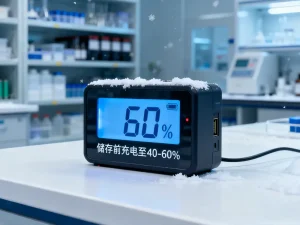
The next step is to maintain a SOC level of around 50%. Are you wondering what SOC is? It is a state of charge, indicating the percentage of the battery that is charged. When storing the lithium battery, you should keep the SOC around 40 to 50%. If this exceeds 70% or falls below 25%, it can cause unnecessary stress on your lithium battery.
The next question is how to maintain a SOC of 50%? That’s very simple, as you can first charge the lithium battery up to 100%. After that, you use the battery until its charging level reaches 50%. Once its charging reduces and reaches around 50%, you stop using it. In this way, you’ll have a lithium battery with the right SOC, perfect for storing the battery in winter.
Quick Highlight: There are different SOCs for different types of lithium batteries. I recommend checking the user manual, where the correct SOC of your specific battery will be mentioned. If you don’t have a user manual, you can keep SOC around 40 to 50%. That’s the safer approach for most lithium batteries, regardless of size.
3- Remove the battery if you can
As you are aware, lithium batteries are used in a wide range of devices. When storing in winter, I recommend removing the battery from that device. Suppose you have an e-bike and want to store its lithium battery in winter. In such a case, remove the battery from your e-bike. Why? The reason is that this will ensure the battery, when stored, does not continue to discharge.
If you keep the battery in the device, it will still be in use. Although its discharge would be slow, it will continue to discharge the charge. As a result, the battery can drain in 4 to 5 months (winter season). You might say this discharge rate for lithium batteries is very slow. However, continuous use and discharge keep the battery under stress, which is not good.
When stored alone, the battery generally does not discharge completely over a 4- to 5-month winter season. So, you won’t have to recharge it to maintain its SOC in the winter season. Ideally, you should remove the battery from the device. After that, clean it and ensure its SOC is around 50%. Remember, small details matter when storing the lithium battery during the winter season.
4- Clean the Metal Part of the Battery and Apply Tape
As you are aware, every lithium battery contains some metallic components. Right? Examples of such parts include the battery terminals. These are the points where positive and negative wires are attached to use the battery. If these parts remain uncleaned, they can get affected and corroded. You must clean these parts to ensure their longevity.
Additionally, I recommend covering the terminals of your lithium battery when storing it in winter. Remember, if these terminals come into contact with any other metal, a short circuit can occur. For better safety, apply a few layers of tape to these terminals. You can even cover them with any cloth, but make sure these terminals remain covered on all sides.
5- Store the Battery in Its Case and in the Right Place
When you buy a lithium battery, it comes in a plastic case. Did you notice that? This case is generally very durable and prevents short circuits. You should keep the lithium battery in its case when storing it during the winter or cold season. Remember, storing the lithium battery in the right place is crucial. Small mistakes in this aspect can cause serious issues for the battery.
I recommend places that have temperatures around 20 degrees Celsius. If the temperature is too low, below 5 degrees Celsius, it can cause serious problems for the lithium battery. Some people advise you to store the battery in a place where sunlight comes. This is the biggest mistake one can make when storing batteries in the winter season.
The reason is that at night, the battery will be exposed to very low temperatures. But in the daytime, direct sunlight contact will increase the temperature. This continuous variation in temperature can affect the internal parts of the lithium battery. Store the battery in a location with a consistent temperature of approximately 20 degrees Celsius.
Things to Consider When Storing Lithium Batteries in Winter
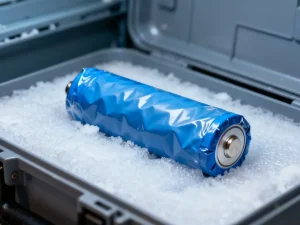
In the previous section, I outlined the steps for storing lithium batteries in winter. However, there are a few common mistakes that people can make during the storage process. Below, I will discuss some key factors you must take care of.
- First of all, you should never store the lithium battery in a place where the temperature remains below 5 degrees Celsius.
- You should always keep the battery at 50% or above when storing. Never keep the charge at 100% or 0% as both extremes can put stress on the lithium battery.
- If the metal body comes into contact with the terminal of the lithium battery, a short circuit can occur. I recommend keeping the lithium battery away from such metal parts or objects.
- You should check the battery’s charge after every 3 months. If the charging rate drops below 30%, I recommend charging it to maintain its SOC at around 50%.
- Ideally, you should open the container in which you have stored the battery once a month. This will give the battery ventilation for better and safer storage.
- In my opinion, it is best not to store the lithium battery for over 8 months. Instead, I recommend using them once every 5 to 6 months. If you leave them stored for an extended period, the lithium batteries can begin to degrade. Their charge-holding capacity can be reduced, affecting the overall battery performance.
Frequently Asked Questions
Can lithium batteries be left in freezing temperatures?
No. You should not leave lithium batteries in freezing or very low temperatures. The reason is that their lithium ion will start to form on the electrode. As a result, the electrode will get damaged. You should store the lithium batteries at temperatures around 15 to 20 degrees.
What is the lowest temperature to store lithium batteries?
I recommend the lowest temperature is around 10 degrees Celsius. Below this, lithium batteries can start to deteriorate and degrade. Ideally, you should keep them between 15°C and 20 °C.
Is it safe to store lithium batteries in the refrigerator?
No. You may have heard that small lithium batteries should be stored in a refrigerator. This practice is very wrong and can be dreadful for the batteries. The temperature fluctuates and is very low, which can damage your lithium battery.
Is it okay to store lithium batteries in the garage?
Yes, if the garage temperature remains around 15 degrees Celsius. Remember, you can store the lithium battery anywhere without any issues. However, the temperature in that area must be favorable for the battery.
Conclusion
Lithium batteries are expensive, aren’t they? If you don’t store them carefully in winter, they will start to malfunction. Unfortunately, many people are unaware of how to store their lithium batteries safely. Due to this, their batteries begin to underperform once they face low temperatures in the winter. Therefore, I’ve written this article, providing a detailed insight into how you can store lithium batteries safely. After reading this article, you’ll be able to store your lithium battery and then keep using it for years to come.