







Lithium batteries are very efficient in many ways. Their durability, longevity, and performance make them a superior option over conventional batteries. But what if you lost a lithium battery charger and cannot find it? Can you charge it without a charger? If yes, the next question is: How to charge a lithium battery without a charger?
Imagine you’re in a remote area and have lost the charger for your lithium battery. That’s nothing short of an awful experience. Right? However, you should not panic as there are some ways you can charge your battery even if you don’t have a charger. In this article, I’ll explain all the methods that you can follow to charge your battery effectively. So let’s begin!
Charging Mechanism in Lithium Batteries

Before discussing how you charge a battery without a charger, let’s first discuss the mechanism of charging. Lithium batteries actually charge and store energy. Remember, charging is actually the process of storing energy inside the battery. This energy is then converted into electricity and used to power different devices.
Lithium battery chargers are particular in their working (charging). Why? The reason is that lithium batteries are sensitive to temperature fluctuations. If charged wrongly, the lithium batteries can overheat and explode. The lithium chargers operate in CC (constant current) and CV (constant voltage) modes. When plugged in, the charger starts to supply current to the lithium battery.
This current will increase the voltage inside the battery. However, lithium batteries (of all types) have specific maximum voltage limits. This limit is 4.2V per cell for lithium-ion batteries. Therefore, the charger continues to supply current and increases the voltage. There comes a time when the battery’s voltage reaches 4.2V per cell.
Now, the charger no longer provides an increase and instead maintains the voltage constant at 4.2V. It does so by reducing the current it supplies to the battery. If the starting current were 1A, now it would be reduced to something like 0.11A. Why? Because the battery’s voltage has reached its maximum level.
When the current is reduced to a very low level, it indicates the battery is fully charged. Remember, the dedicated lithium charger monitors both current and voltage. It never exceeds the voltage of the battery, which is typically 4.2V per cell for lithium-ion batteries. This voltage limit is 3.6V per cell for LiFeP04 batteries. In this way, the charger charges the lithium batteries without causing overheating issues.
Is it Possible to charge a Lithium Battery Without a Charger?
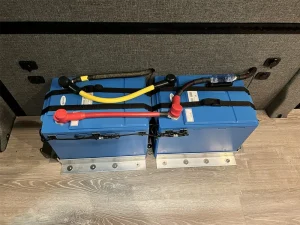
Yes – it is possible to charge lithium batteries even without a charger. However, you should not ely on charging the battery using alternative charging method. Why? The reason is that using other means to charge the battery can cause heat or overcharging issues. Charging the battery with other methods is an excellent option only in emergencies.
Several other methods can also help charge the battery. For example, you can charge the battery using either a USB port or a solar panel. In such a case, you won’t need an official charger for the lithium battery. However, these methods may not be the safest as they cannot monitor the voltage and current.
As I said earlier, lithium batteries are sensitive to overcharging. Right? Therefore, the charger you use must be able to monitor and control both current and voltage. When you use other methods of charging, they typically lack a monitoring system. Therefore, you must be cautious when using them to prevent overheating issues with the lithium batteries.
I recommend charging the battery to 70-80% when using an alternative charging method, rather than a charger. This will prevent the lithium battery from overcharging. Therefore, some voltage regulators are available in the market. You should use those regulators to ensure voltage does not exceed the maximum limit. This will ensure the safety of the lithium battery.
How to Charge a Lithium Battery Without a Charger? 4 Effective Methods
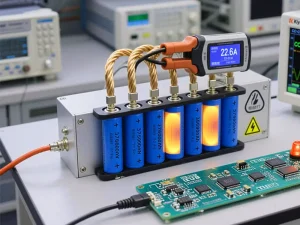
There are multiple ways to charge the lithium battery. Remember, not all of these charging methods are 100% safe. Why? The reason is that they don’t have a current voltage monitoring and controlling system. Thus, you’ll need to be attentive when using these charging methods and stop charging when the battery reaches 80% charge.
1- Using a USB port that has a Voltage Regulator
USB ports are available in almost all modern devices. Right? You’ll see them even on your laptops, desktop computers, and so on. Now, you will need a USB cable to connect the battery to the power source. Once the battery is connected to the power source, it will start to charge. Remember, the USB cable has two wires of two colors, red and black.
You will need to cut the cable and locate the thin red and black cables. After that, connect the red wire of the USB cable to the positive terminal of the lithium battery. Similarly, the black wire of the USB cable is attached to a negative terminal. Once done, insert the USB cable into the USB port. Once done, your lithium battery will start charging.
There is one drawback, as these USB ports supply more voltage than 4.2V. Remember, high voltage would cause the lithium battery to overcharge. Right? For this, I recommend using voltage controllers with the USB port. This controller will ensure that the battery’s voltage does not exceed 4.2V per cell. As a result, the lithium battery charges smoothly.
2- Use a Dedicated Power Supply (Device) that Provides DC Current
In the market, some powerful devices such as power banks are available. They are chargeable and provide a steady DC (direct current) supply. This DC is needed to charge the lithium batteries. Interestingly, these devices come in different sizes. If your battery is larger, you’ll need a DC power supply with higher battery storage capacity, and vice versa.
Interestingly, these devices allow you to adjust both current and voltage. Before starting, you’ll need to set the specific voltage, i.e., 4.2V per cell, for the lithium-ion battery. After that, the clamps of the devices must be connected to the terminals of the lithium battery. Once done, you’ll have to switch on the device, and it will start charging your lithium battery.
Quick Highlight: I appreciate these DC power supplies or devices due to their safety features. They supply adjustable current and ensure the battery’s voltage does not become too high. Remember, you’ll have to set the specific parameters for both voltage and current. As long as current and voltage remain within limits, the lithium batteries remain safe.
3- Charge a Lithium Battery with a Solar Panel
Using solar panels to charge lithium-ion batteries is one of the most cost-effective methods. Why? The reason is that these panels utilize sunlight during the daytime and convert it into electricity. Interestingly, the solar panels produce DC, but it is very unstable. If the sun is bright, the panel would produce more current. However, if clouds come, the panel’s efficiency would decrease.
This is also true for voltage, so it becomes unsafe to charge lithium batteries directly from a solar panel. I recommend using the dedicated charge controller with the solar panel. The reason is that these controllers will maintain a steady current and voltage. It won’t allow the current to go too high when the sun is bright and vice versa.
As a result, the lithium battery gets a stable current. However, this solar panel can continue to provide current without monitoring the voltage of the lithium battery. As a result, the voltage of the lithium battery can exceed the maximum limit of 4.2V. In such a case, I recommend manually checking the battery’s voltage.
You can disconnect the solar panel when the battery is at 80 to 85% charge. In this way, the voltage of your battery will not exceed the specific limit. Remember, you can also use a voltage regulator with this charging setup. However, the cost of this voltage regulator can make this method a bit more expensive. Therefore, I recommend manually monitoring the voltage of the lithium battery.
4- Use Jump Starter (You Can Use Jump Starter or a Charged Battery)
Are you left with no option but to charge your lithium battery? No USB port, power bank, or solar panel available for charging? In such a case, you can use a jump starter to charge your lithium battery. However, I don’t recommend using jump starters as they are made for different purposes. As discussed in a previous article, a jump starter is a device that provides a sudden burst of energy.
This quick burst of energy can revive a dead battery or crank the car’s engine. However, it is not suitable for charging the lithium battery. The reason is that jump starters provide current at higher levels than required. Additionally, it cannot control the voltage of the lithium battery. As a result, charging a lithium battery can cause it to overheat or become damaged.
If you have no option, then I recommend using a current and voltage controller with a jump starter. In this way, the lithium battery will receive a steady current, and its voltage will remain within the limits. Additionally, you can also use a donar battery (lead acid) as a jump starter. Connect the donor battery to your lithium battery and charge it. However, both of these charging methods are risky and should be avoided in most cases.
Is It Safe to Charge a Lithium Battery Without a Charger?
Yes and No. The safety of the lithium battery depends on the type of charging method used. Generally, the charging methods with current or voltage regulators are safe for the battery. On the other hand, if the charging method has no regulator, it is considered unsafe for the lithium battery.
As I said earlier, lithium batteries are highly sensitive and require special care during charging. The lithium battery charger features specialized controls. This enables it to regulate current and voltage. Right? Therefore, this charger does not exceed the maximum voltage limit of the battery, i.e., 4.2V per cell. That is why the lithium battery chargers are 100% safe and recommended.
But in our case, we don’t have a lithium charger. In such cases, you should use a charging method that offers a voltage regulator or adjustable voltage. This way, your charging method will charge the lithium battery safely and efficiently. Why? The reason is that its voltage regulator prevents the voltage from exceeding the maximum limit. Such charging methods are 100% safe for the lithium battery.
Examples of such methods include: using a USB power supply with a regulator, and a solar panel with a charger controller. You can also use a power bank with a parameter adjustment feature for charging a lithium battery. However, using the jump starter method to charge the lithium battery is unsafe. Why? Because the jump starters provide higher current and voltage, which is very bad for the lithium battery.
Conclusion
Lithium batteries are an integral part of our daily routine. Aren’t they? They offer excellent energy storage due to their better energy density and are lightweight. However, we humans make mistakes—and can lose the charger for our lithium batteries. This situation can be tricky, especially for newcomers who lack knowledge about lithium batteries.
Does the loss of a charger mean the battery is wasted? Absolutely NOT! There are different ways to help you charge your lithium batteries, even if you don’t have a charger. In this article, I’ve discussed some popular ways, along with how you can make them safe for lithium batteries. Remember, these charging methods should only be used in case of emergency.