







Charging a lithium battery can be a big deal for many, especially those who don’t have a lithium charger. Right? You might hear people saying “Don’t use normal chargers to charge lithium batteries.” This can confuse and increase your worry about the charger. You may ask yourself: Can I charge a lithium battery with a normal charger?
The answer to this question is a big NO. It is not recommended to use a normal charger for lithium batteries. Why? There are multiple reasons, and a normal charger can affect the quality of your lithium battery. In this article, I’ll explain everything about the logic behind why I stop you from using normal chargers for lithium batteries.
What is a Normal Charger?
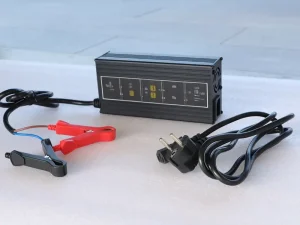
Sounds weird that I wrote “normal charger”? Before going, let’s first discuss what a normal charger is and how it works.
The normal charger typically refers to a device used for charging lead-acid batteries. It lacks modern features like voltage controllers or monitoring systems. This charger is considered safe for use with lead-acid batteries. Why? Because those lead-acid batteries have excellent tolerance for overcharging.
Normal chargers employ outdated technology and are designed to charge various battery types. Those types include NiMH batteries, NiCd batteries, and others. However, the charger’s drawback lies in how it charges the battery. For example, during charging, they provide a steady current without any optimization.
Suppose you have a lead-acid battery in your car. You use the normal charger to charge your battery. In such a case, this charger will maintain a steady current to charge the battery. It won’t bother if the battery is half or fully charged. It won’t even consider managing the voltage. Due to this, the battery becomes overcharged, which could lead to heating issues in the battery.
These chargers are designed for batteries that can withstand overcharging. For example, lead-acid batteries won’t explode if overcharged. What makes normal chargers stand out is their low pricing. Why? The reason is that these chargers have no current or voltage monitoring system. They don’t have an optimization system to maintain stable battery parameters.
Can I Charge a Lithium Battery with a Normal Charger?
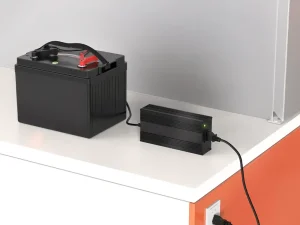
Yes, technically, you can use it to charge the lithium battery. When plugged in, these chargers will start charging. However, these chargers can affect the quality and performance of the lithium batteries. Your battery may show an overheating issue due to an unbalanced voltage-current proposition.
Should you use a normal charger to charge a lithium battery? The answer is a big NO!
If you do, you’ll end up with regrets. The reason is that normal chargers are not made for lithium batteries. They don’t have the required features that could charge a lithium battery safely. Remember, lithium batteries are highly sensitive to overcharging. Their charging should be done with care; otherwise, they may show heating issues.
Why You Should Not Charge a Lithium Battery with a Normal Charger?
Each lithium battery type comes with a maximum charging voltage. Their voltage should not cross their specific rated voltage when they are fully charged. Got it? For example, Lithium-ion (Li-ion) batteries have a maximum voltage of 4.2V per cell. Similarly, for LiFePO₄, this voltage rating is 3.6V. So when they charge, their voltage should remain in these limits.
However, the standard charger cannot maintain the voltage within the required limits. Suppose you plug in the normal charger with a lithium-ion battery. The charger will continue to supply current at a steady rate. It won’t either reduce nor increase it. Therefore, the voltage of the lithium-ion battery will continue to increase. Eventually, there will be a time when this voltage exceeds 4.2V per cell.
It means that the maximum voltage limit (4.2V) of the lithium-ion battery has been exceeded. However, the charger will continue to supply more current at the same rate. This will result in overcharging, and a higher current will cause the lithium-ion battery to overheat. As a result of overheating, the battery can be damaged or even explode due to overcharging.
When the voltage reaches 4.2V per cell, the charge should reduce the current. This reduction of current will stabilize the voltage at 4.2V, and the battery will be charged as the current decreases. This is what the lithium battery charger does. It monitors the current and voltage, keeping them balanced. When the voltage reaches 4.2V per cell, it reduces the current and avoids overcharging.
What Happens if You Charge a Lithium Battery with a Normal Charger?
As I mentioned earlier, a standard charger often fails to balance voltage and current when charging a lithium battery. As a result, your lithium battery can face the following problems:
- Overcharging & overheating issue
- Reduced energy storage for next use
- Visible swelling on the battery’s surface
- Your battery may not charge when switched back to a lithium battery charger
- The lithium battery’s lasting power per charge can be affected, along with its overall lifespan
- Due to overheating, your battery can explode and get damaged in severe cases (extreme overcharging).
How Does a Lithium Battery Charger Work When Charging a Lithium Battery?
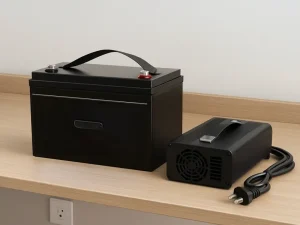
The working of lithium batteries is based on CC and CV principles. The CC here refers to constant current, while CV represents the constant voltage. These chargers balance both current and voltage, safely charging the lithium battery. You won’t face any heating issues when using a lithium battery, and I will explain why.
Suppose you have a lithium-ion battery and you charge it with a dedicated lithium-ion battery charger. First, the charger will provide current (let’s say 1A). Due to this current, the voltage of the battery will continue to increase. The charger will keep monitoring both current and voltage during the charging process.
Once the voltage reaches the maximum limit, i.e., 4.2V, the charger will make a change. It will start reducing the current supplied to the battery. If the initial current was 1A, now it will be reduced to 0.5A. However, the voltage will remain stable and constant at 4.2V per cell. The charger will continue to reduce the current until it reaches zero.
When the current becomes zero, and the voltage is 4.2V per cell, it means the lithium battery is fully charged. There won’t be an overcharging issue because the voltage does not exceed 4.2V per cell. You won’t notice overheating issues because the current is reduced when the voltage increases. The lithium battery charger maintains this balance and charges the battery safely.
Quick Highlight: Each lithium battery type has its specific maximum voltage capacity. In a LiFePO₄ battery, the maximum voltage capacity is 3.6V per cell. So the lithium battery charger won’t allow the voltage to exceed 3.6V per cell. Similar to Li-ion and Li-Po batteries, this rating is around 4.2V per cell. The lithium batteries perfectly manage their voltage limits.
Is a Normal Charger Safe for Batteries Other Than Lithium Ones?
Yes, normal chargers are generally safer for older-fashioned batteries. You’ll see people using normal chargers to charge their car batteries. Remember, the car batteries are lead-acid ones, which are based on old technologies. So, they won’t face any issue even if the normal charger overcharges them.
The reason is that old batteries work differently from lithium batteries. Suppose the lead-acid battery is overcharged through a normal charger. Now, this battery will start to release the extra energy in the form of either gas or heat. These batteries have vents that release gases to compensate for overcharging issues.
As a result, they don’t overcharge even when a normal charger overcharges. Additionally, the old batteries are not sensitive to higher voltage. They can tolerate higher current and voltage if both parameters are in balance. As a result, they don’t face any issues even when the normal charger increases their voltage beyond the limits.
Should you use a normal charger to charge old batteries? Ideally, NO. However, you don’t have any other option but to use it or a charger of a similar working principle. All the old batteries come with chargers that lack modern monitoring features. So you have to use them (normal charger). However, keep these batteries in a well-ventilated area when charging. This will help discharge gases or heat more easily if your old battery overcharges.
Frequently Asked Questions
Can I charge a LiFePO4 battery with a normal charger?
You can, but you should not charge a LiFePO4 battery with a normal charger. Doing so would overcharge your LiFePO4 battery, reducing its efficiency. Additionally, overheating can lead to the explosion of your battery. So I recommend charging your LiFePO4 battery with a dedicated lithium battery charger.
Why do lithium batteries need special chargers?
As I said earlier, lithium batteries are based on modern technologies. They are sensitive to overcharging. Their voltage and current must be optimized during charging. That’s why these require a special charger, instead of a normal charger used for lead-acid batteries.
Conclusion
In short, you should never use a normal charger to charge a lithium battery. Technically, you can do so, but it would be a terrible practical idea. Why? The reason is that normal chargers lack modern BMS and voltage controllers. Therefore, it would maintain the current supply without voltage monitoring. As a result, the battery’s voltage will become too high, leading to overcharging.
Remember, all types of lithium batteries are susceptible to overcharging. Additionally, a steady current during charging would also cause the lithium battery to overheat. If a lithium battery remains charged for an extended period, it can even explode due to heat buildup. Therefore, I stress using a dedicated lithium battery charger for charging lithium batteries.