








Forklifts are industrial vehicles used at various sites. They can handle heavy goods and help with their transportation. However, the forklift uses batteries for its work and operations. Lithium and lead-acid batteries are two top options used in these industrial vehicles. These batteries have differences that spark debate on lithium-ion vs lead-acid forklift batteries.
Lead-acid batteries are the oldest type, having been used for many decades. People have a special association with these batteries. However, lithium-ion forklift batteries come with advanced technology and better performance. Their usage is becoming more common these days. In this article, I’ll compare these two forklift batteries head-to-head. Let’s begin!
Overview of Lithium-Ion & Lead-Acid Forklift Batteries

Before comparing, let’s first understand the basics of lithium and lead-acid forklift batteries.
Lead-acid batteries are the oldest and least efficient types. They use lead plates and sulphuric acid for their operations. The chemical reaction occurs between the plates and sulfuric acid, producing electricity. These batteries are inexpensive, but their overall performance is not ideal.
In the past, there were fewer options. People used to rely heavily on these lead-acid batteries for their forklifts. They are big, but their performance is something that is big and disappoints me. However, many people still consider these types of batteries due to their cost-effectiveness. Their less efficient energy production makes it less suitable for forklifts.
Lithium-ion batteries utilize lithium ions and electrodes for their operation. The ion moves from the electrolyte present inside batteries, producing electricity. During discharge (usage), the ions move from the anode to the cathode of the batteries. The flow of ions produces electricity used to run the motor of forklifts.
It is noteworthy that lithium-ion batteries don’t use sulfuric acid or lead plates. The use of sulfuric acid in lead-acid batteries makes them messy. However, the lithium movement inside the electrolyte produces electricity quickly. What I love about lithium-ion batteries is that they are compact and fully charge within 2 hours.
On the other hand, lead-acid batteries can take several hours to charge. You’ll see modern forklifts come with lithium-ion batteries as standard. Manufacturers are focusing on increasing efficiency from batteries. However, almost all the old model forklifts used to come with lead-acid batteries.
Differences Between Lithium-Ion & Lead-Acid Batteries
In the previous section, I explained how these two forklift batteries operate. There are many differences between these two battery types. In the section below, I’ll discuss all those differences and help you choose the right one for your forklift.
1- Battery Technology

The lead-acid batteries rely on conventional methods for generating electricity. They use lead plates submerged directly into the sulphuric acid. A reaction happens between the lead plate and the acid, generating electricity.
This is old technology and has been in use for multiple decades. Over time, leakage of sulfuric acid can occur, causing the battery to become dirty. On the other hand, lithium-ion batteries utilize advanced technology. They use lithium ions that travel in nonaqueous electrodes.
During charging, the lithium ions move from the electrode to the anode and deposit on the anode. These deposited ions start to move back from the anode to the cathode during discharge. During this flow of lithium ions, the electricity is produced to run the forklifts. This modern technology ensures better efficiency and performance of these batteries.
2- Weight & Size
The lead-acid batteries are known for their bulky size. They are extremely heavy, making them challenging to carry and install on the forklifts. The larger size of these batteries is a significant drawback. On the other hand, lithium-ion batteries are compact and lightweight. Carrying them from one place to another is relatively easy.
The larger batteries are very challenging to install in the forklifts. Due to their compactness, lithium-ion batteries can fit in small spaces. It also makes their installation in forklifts very easy. When it comes to capacity, both batteries have different specifications. Batteries with more storage capacity will be expensive, and vice versa.
3- Charging Time & Lifespan
The lead-acid batteries take around 5 to 8 hours to charge completely. The reason is that this battery uses old technology. The chemical reaction between a lead plate and sulfuric acid is very slow. Due to this, charging takes more time.
Additionally, you’ll have to give the battery 1 to 2 hours to cool before using it. During the chemical reaction, some heat is produced. If this heat is not removed, it will negatively impact the battery’s performance. On the flip side, lithium-ion batteries charge completely in 2 hours, making them faster.
The lead-acid batteries are compromised in terms of their lifespan. They can provide a maximum of 1500 charge cycles. On the other hand, lithium batteries easily offer 3500 to 4500 charge cycles. If you maintain the battery, you can even achieve a charge cycle of over 5,000. I consider lithium batteries superior in terms of both charge time and lifespan.
4- Energy Efficiency & Power Consistency
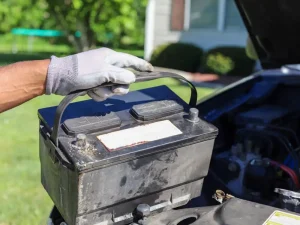
Lithium-ion batteries are known for their excellent energy efficiency. It can convert 90-95% of stored energy into electricity. There is very minimal loss of energy during the charging and discharging process.
On the other hand, lead-acid batteries are less efficient, converting only 70% of the energy into electricity. The remaining stored energy is lost during the discharge. Additionally, lithium-ion batteries provide a consistent power supply, keeping the forklift running smoothly. During a charge cycle, their voltage does not drop even if the battery is very low.
On the contrary, lead-acid batteries begin to drop their voltage as the energy discharge starts. The forklift may slow down due to this voltage drop. You’ll generally see the forklift stop working even if the battery still has 30% charge. This is due to a drop in voltage in the lead-acid batteries. Lithium-ion batteries don’t give this issue of voltage drop.
5- Battery Swapping Needs & Ventilation Requirement
As I mentioned earlier, lead-acid batteries charge very slowly. Right? Once these batteries are discharged, they will undergo a charging process. This process will take 5 to 8 hours. Additionally, these batteries require 1 to 2 hours for cooling. Why? These batteries charge when the reaction between the lead plate and sulphuric acid happens.
As a result of this reaction, heat is produced, which must be removed. Once the battery is charged, you’ll have to keep it out for heat removal and cooling. Due to this, these batteries need to be swapped. You’ll have to use one more battery as a backup. Once you have one battery on charge, you can use the second battery to keep the forklift running.
Lithium-ion batteries don’t require battery swapping, as the charge is completed in under 2 hours. Lead-acid batteries produce some harmful gases during charging, which must be evacuated. Therefore, these batteries require ventilation. On the other hand, lithium-ion batteries don’t emit any gases during charging. So, you don’t need any specialized ventilation system when using these batteries.
6- Maintenance Requirements
The lead-acid batteries require regular maintenance. As I said earlier, they use sulphuric acid for their operations. This acid can leak, creating a mess. Additionally, you’ll have to check water levels and ensure water does not drop below its required level. Additionally, their regular cleaning of the terminal is also essential.
On the other hand, lithium-ion batteries come with a sealed design. Their electrolyte does not leak, so these batteries remain safe from leakage. Modern lithium-ion batteries come with a BMS (Battery Management System). This system automatically monitors battery temperature and overall performance.
7- Safety & Environmental Impact
Lithium-ion batteries are 100% safer than lead-acid batteries. As I mentioned earlier, lead-acid batteries contain sulphuric acid. However, the sealing of these batteries is not ideal. Therefore, this acid can spill, leak, and potentially affect nearby objects. Additionally, these batteries produce harmful gases during their charging process.
Inhaling these gases can be bad for your health. The lithium batteries have perfect sealing. Their electrolyte does not leak and remains inside the battery. Additionally, their charging process does not emit any harmful gases. When it comes to recyclability, I consider both batteries the same. However, lead-acid batteries use lead plates submerged in acid that corrode over time. The corroded plates have a slight impact on the recyclability of lead-acid batteries.
8- Upfront Cost & Ideal Use Cases
The lead-acid has a very low upfront cost, which is a significant advantage. Most people buy these batteries due to their cost-effectiveness. However, this type of forklift battery has a higher long-term cost. Why? These batteries require regular maintenance, which increases the overall cost. Additionally, their lifespan and overall performance start to degrade over time.
On the other hand, lithium-ion batteries are costly and premium. Their higher upfront cost is a significant disadvantage. However, these batteries prove to be cost-effective in the long run. You won’t have to spend a single penny on their maintenance. Moreover, they last longer, and you won’t have to worry about replacing them.
I consider lead-acid batteries suitable for smaller forklifts that do not run for long periods. These batteries will cause some downtime during the charging process. Conversely, the lithium-ion batteries can run the forklift for hours consistently. Therefore, I present these batteries as the best option for a heavy-duty forklift that works many hours a day.
Lithium-Ion vs Lead-Acid Forklift Batteries: Which One Should You Choose?
It depends on the size of your forklift and the needs of your work. However, I consider lithium-ion batteries the best option if you prefer quality and performance. Therefore, it is advisable to opt for lithium-ion batteries over lead-acid ones. Here is why!
These forklift batteries last up to 4500 charge cycles and offer over 90% energy efficiency. Additionally, they require no regular maintenance, which reduces ongoing costs. They will keep the forklift running for many hours without downtime. Their quick charging time makes them the superior option.
So, your first choice should be these lithium-ion batteries. The cost of these batteries is very high, which can be a hurdle. However, consider it an investment. Once bought, these batteries keep your forklift running for years to come. However, if you have a tight budget, you can opt for lead-acid batteries instead. Their performance is not ideal, but they are a good starting point for small forklifts.
總結
Both lead-acid and lithium-ion batteries are widely used in forklifts. However, they differ from each other in terms of their performance and longevity. In this article, I explain the significant differences between these two battery types.
So, my opinion is that you should always prefer lithium-ion batteries for forklifts. However, if you have a small forklift that is seldom used, you can opt for lead-acid batteries. However, you should be prepared to face the challenges when selecting these batteries. Their regular maintenance, long charging time, and low charge cycles are significant drawbacks.