








Batteries are the devices used in almost every modern electronic gadget. They store electrical energy and power up the devices. There are different types of batteries available in the market. Among those, AA and AAA batteries are very popular, especially for small to medium-sized gadgets. Both have distinct features, sparking debate over AA vs AAA battery.
Interestingly, most people believe that AA batteries are superior in most cases. That’s because these batteries offer more energy storage capacity. However, each has its own advantages and works best in different situations. In this article, I will compare AA and AAA batteries and discuss their key differences. So, let’s get started!
Overview of AA and AAA Batteries
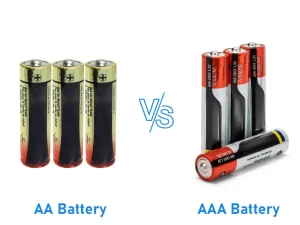
The use of batteries has been widespread for decades. However, both AA and AAA are ideal for small gadgets and are very safe.
AA and AAA are standard batteries used worldwide. However, they differ in size and capacity. They look and work similarly in terms of chemistry and basic operation. However, AA batteries are larger and have a higher storage capacity. On the other hand, AAA batteries are smaller, making them an ideal option for compact electronic gadgets.
AA batteries can hold 1800 to 2800 mAh. AAA batteries are smaller with a maximum energy storage of around 800 to 1200 mAh. However, this energy storage can vary depending on the chemical composition used. For example, lithium AA batteries store up to 3400 mAh of energy.
By contrast, lithium AAA batteries of the same size store around 1,800–2,000 mAh. Not just energy storage, but also the chemical composition affects the performance and longevity of these batteries. The working of these AA and AAA batteries is standard. They consist of electrodes (cathode and anode).
During use, an electron moves from the anode to the cathode, generating current. Both consist of specific chemicals (electrodes) that facilitate the movement of ions. When batteries are charging, these electrons move back from the cathode to the anode. They remain stored on the anode so that energy remains fully charged and vice versa.
Differences Between AA and AAA Batteries
The construction and working of these batteries are the same. This does not mean that they are the same and can be used as replacements for each other. In the section below, I will explore the key differences between AA and AAA batteries.
1- Size & Dimensions
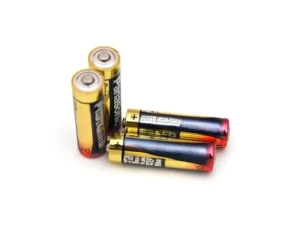
One of the fundamental differences between AA and AAA batteries is the size. The AA is a medium-sized battery measuring 50.5 mm in length. Additionally, the diameter of an AA battery is 14.5, making it appear wider at the base. On the other hand, AAA batteries are much smaller, measuring 44.5 mm in length and 10.5 mm in diameter.
Lengthwise, AA batteries are 6 mm longer than the AAA batteries. AAA batteries have a diameter of 10.5 mm, making them appear slimmer. AA batteries look bulkier and thicker due to a larger diameter. Due to this size difference, AA batteries are used in mid-size devices. AAA batteries are compact and fit in small devices.
2- Capacity & Power
One of the prominent differences between AA and AAA batteries is in their capacity. AA batteries are larger and have a higher energy storage capacity. Remember, their energy storage capacity can vary depending on their chemistry. However, AA batteries will always store more energy than AAA batteries regardless of their chemistry.
To be more accurate, the capacity of AA batteries is around 3000 mAh. Conversely, AAA batteries can only store about 1200 mAh of energy. As a result, the AA battery can power the electronic device for extended periods. On the other hand, AAA batteries drain quickly due to their smaller energy capacity.
3- Weight & Voltage
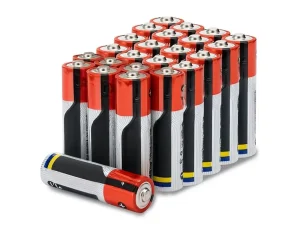
As previously mentioned, AA batteries are larger. This means that they consist of more materials in their construction. Their frame is bigger, containing more material than that of AAA batteries. So, using more material simply increases the weight of AA batteries. These batteries weigh around 23 grams. Conversely, AAA batteries are smaller and less material is used to make their frame.
As a result, AAA batteries are very lightweight, weighing around 12 grams. In simple terms, AAA batteries weigh half as much as AA batteries. When it comes to voltage, both of these batteries offer the same voltage, i.e., 1.5V. However, if these batteries are rechargeable, they supply a slightly lower voltage of 1.2V.
4- Battery Life & Performance in Extreme Temperatures
Battery life differs between these two types. The way a battery is used generally determines its lifespan. However, the AA battery has more active material (larger electrodes and more electrolyte). Because of this, this battery type can power the device for a longer duration with steady current. The overall lifespan of AA batteries is better than that of AAA batteries.
At extremely low temperatures, AA batteries perform better. Why? That’s because they have more electrolytes. Low temperatures slow down the reaction inside the battery. However, more electrolyte and larger electrodes continue to provide optimal output to the device. AAA batteries may not work at very low temperatures. However, using these batteries at very high temperatures can shorten their lifespan.
5- Ease of Availability & Convenience
Both of these batteries are readily available everywhere. The reason is that they are used worldwide and have become a necessity for almost every gadget. From TV remotes to digital thermometers, their use has led to more productions. As a result, both AA and AAA batteries are never out of stock.
However, AA batteries are generally in higher market demand than AAA batteries. As a result, finding AAA batteries can be a bit more difficult, especially in remote areas. However, you’ll easily find electronics stores and supermarkets. Since these batteries meet international standards, their sizes are the same. It does not matter where you purchase; they will offer the same performance and capacity.
6- Safety & Eco-Friendliness
Generally, there’s no risk associated with AA and AAA batteries. They’re labeled as safe to use in devices. However, if you use them incorrectly, they can pose safety issues. Also, using them in high-temperature conditions is a bad idea. When these batteries overheat, they can leak and damage the device they’re used in.
Generally, AA and AAA batteries are divided into two main categories: disposable and rechargeable, which differ in their eco-friendliness. Disposable AA and AAA batteries are not safe for the environment. They’re thrown away, and the electrolytes or chemicals they contain pollute. Rechargeable AA and AAA batteries are more eco-friendly and sustainable.
7- Cost Comparison & Applications
Honestly, both AA and AAA batteries are not costly. Unlike bigger batteries, you don’t need to break the bank to buy these two types. However, AA batteries are slightly more expensive than AAA batteries. That’s because AA batteries are larger and require more materials in their manufacture. Additionally, they store more energy, which enhances their value.
On the other hand, AAA batteries are compact with less energy storage and material requirements. So, they are inexpensive no matter where you purchase this battery type. Remember, AA batteries with lithium chemistry would be slightly more expensive. Additionally, rechargeable batteries (both AA and AAA) are more expensive than disposable ones.
The application of these battery types also varies due to their difference in size and capacity.
Here is the table showing applications of AA and AAA batteries:
| AA Battery Applications | AAA Battery Applications |
| Toys | TV remotes (small) |
| 손전등 | Digital thermometers |
| Wall clocks | Wireless mouse |
| Wireless keyboards | Small LED lights |
| Medium-power gadgets | Small electronic toys |
Can You Use AA Batteries Instead of AAA?
The answer is a big No! AA and AAA batteries are not interchangeable. They differ significantly in size, capacity, and performance. First, neither battery fits into a single device. The reason is that AA is bigger. If the device is rated for AA, its battery slot would be larger.
If you insert a AAA battery, it won’t fit there. Even if you somehow fit it, it won’t power the device because it has a smaller energy storage capacity. Devices rated for AA batteries require more energy to operate. So you should use an AA battery where it fits, i.e., a medium-sized device. In contrast, AAA batteries are only suitable for tiny gadgets.
자주 묻는 질문
Is an AA battery better than an AAA?
No. Both AA and AAA battery types have unique properties. AA batteries have higher energy density and are suitable for medium-sized gadgets. AAA batteries are smaller and have less energy storage, making them ideal for small devices. Both of these batteries come with unique use cases.
How to identify AA or AAA batteries?
You can identify the AA and AAA through their size. AA batteries are 50.5 mm long, whereas AAA batteries are 44.5 mm long. Additionally, AAA batteries are smaller when you hold both batteries in your hand.
Which battery is used in wall clocks?
Generally, an AA battery is best suited for wall clocks. They come with higher energy storage, which powers the wall clock for a long time. Additionally, you should read the wall clock’s user manual to determine the exact battery size required.
Conclusion: Which One Should You Choose, AA or AAA Battery?
When it comes to AA vs AAA batteries, there is no option superior to the others. In fact, both of these batteries have unique use cases and are ideal for different devices. If your device needs more power, I recommend using AA batteries. Their high energy storage will ensure that your device runs for longer. However, if your device is tiny, you may consider AAA batteries. The choice between AA and AAA batteries primarily depends on the size of your device and its energy requirements.